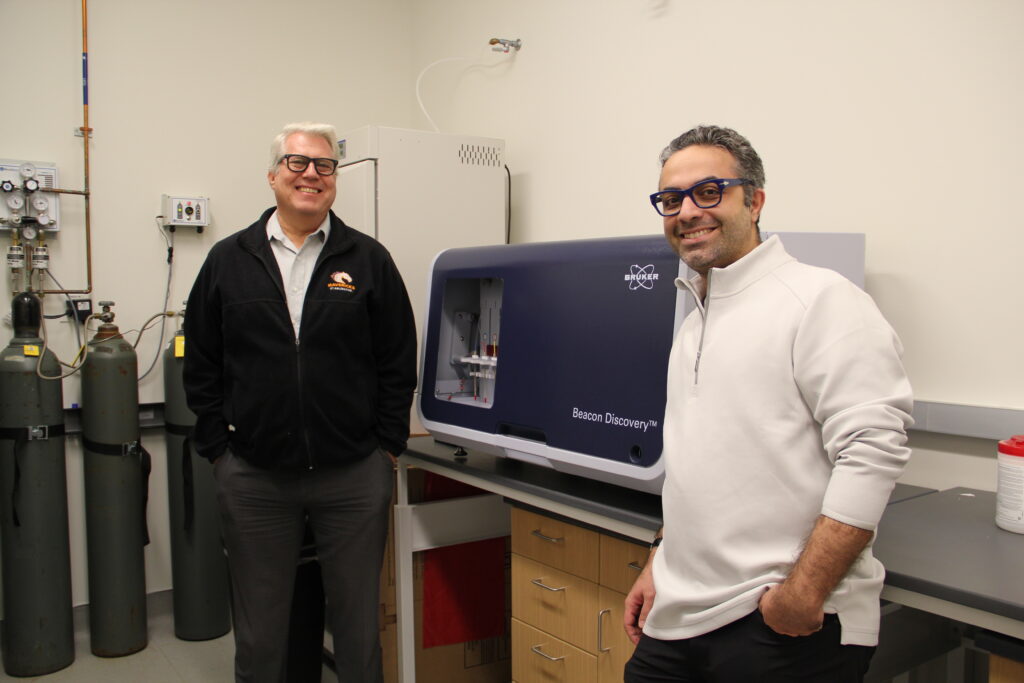

When innovation meets opportunity, breakthroughs happen. The University of Texas at Arlington’s Institute of Biomanufacturing and Precision Medicine (IMPRINT) became the first organization to commercially acquire the Beacon® Discovery™ instrument – a milestone that’s redefining antibody discovery and accelerating precision health research. In this conversation, we spoke with the institute’s founding director Dr. Jon Weidanz about their vision, the challenges they aim to solve, and the work Beacon Discovery provided to accelerate antibody discovery and translational research.
From Vision to Reality: Beacon Discovery makes its way to Arlington, Texas
Can you tell us a bit about your organization and your role?
I serve as the founding director of the Institute of Biomanufacturing and Precision Medicine (IMPRINT) at the University of Texas at Arlington (UTA). IMPRINT was launched in 2024 to position UTA as a leader in advanced biomanufacturing and precision health innovation. Our mission is to accelerate therapeutic development, expand life and health sciences research, and create a skilled workforce for the biotech sector. My background includes over two decades in Immunotherapeutics research, leadership roles in academia, and experience as a biotech entrepreneur.
What led you to seek out a solution like Beacon Discovery?
Our vision is to establish a regional hub for antibody discovery and biomanufacturing in North Texas. To achieve this, we needed a platform that could dramatically accelerate the antibody discovery process, integrate seamlessly with our translational pipeline, and support both academic and commercial projects.
What were the key capabilities that you sought in a platform?
Several factors drove our search: Speed and efficiency in screening antibody-secreting cells, seamless integration with UTA’s full translational pipeline (IMPRINT, NTGC, NCTM2), regional impact as a demonstration site for major institutions and startups, and strong support for training and workforce development.
What specific challenges or needs were you hoping to address with this instrument?
We aimed to overcome bottlenecks in antibody discovery, particularly the time and cost associated with traditional screening methods. Additionally, we wanted to create a scalable solution for contract research, workforce training, and collaborative projects with industry partners.
What types of samples or targets will you primarily be using Beacon Discovery for?
Our primary focus will be on antibody-secreting B cells targeting tumor-specific peptides presented by MHC complexes, as well as other immunotherapeutic targets. We also anticipate projects involving infectious disease antibodies and precision medicine applications.
Which specific workflows or assays are you planning to implement with the instrument?
We plan to implement workflows for single-cell antibody screening, AI-driven antibody modeling, and custom assay development for academic and industry clients. These will include webinars, contract research projects, and collaborative studies designed to accelerate therapeutic development.