
Beacon®
Optofluidic System
From discovery to development: find the cells
that are most important to you
Illuminating the Life of Single Cells
The Beacon optofluidic system provides an innovative, high throughput solution to functionally assess single cells for antibody discovery, cell line development, and T cell profiling.
- Functionally profile individual live cells
- Track and assay the same individual cell across multiple time points
- Generate greater insights through deep profiling of each cell or clone
- Recover live cells for linked function and downstream analysis
- Generate rich, high-parameter functional single cell data to feed into training of AI models
- Automate and scale workflows far beyond manual, time-intensive analysis
Understand the life of single cells through functional cellular analysis with the Beacon Platform.
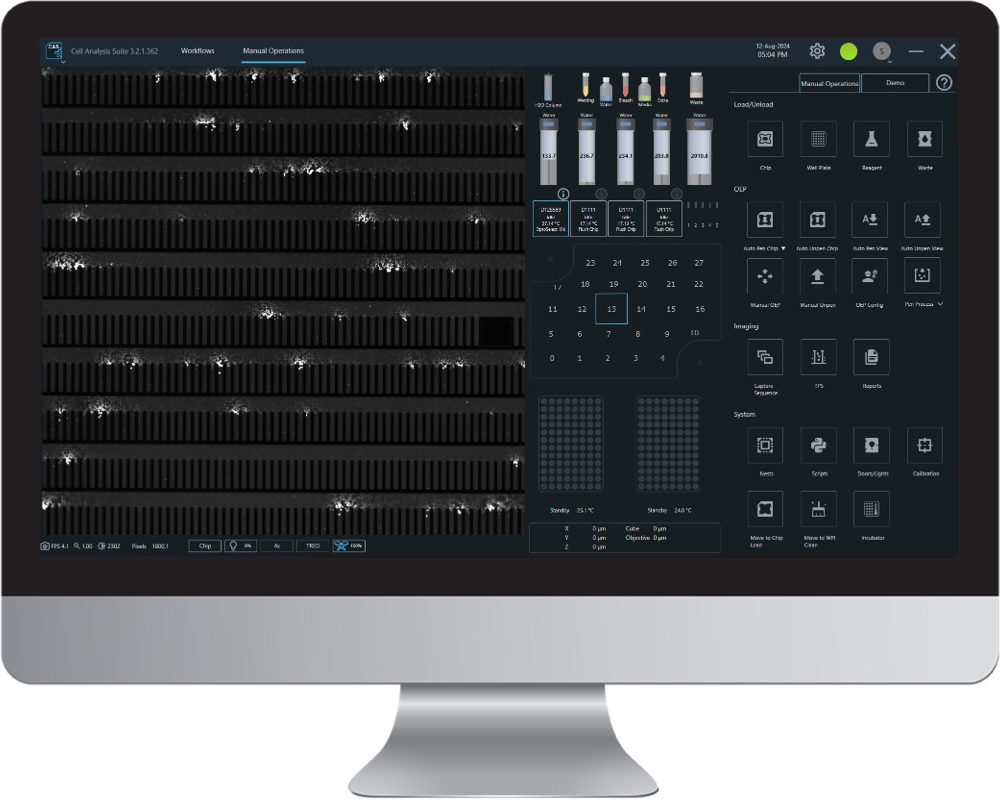
Design and execute single cell experiments in real-time with unparalleled flexibility to generate. Explore the rich, high parameter data generated from the Beacon optofluidic system.
The Premier Functional Single Cell Analysis Platform
Function-First Total Solution for In-Depth Cell Line Development
At the core of the Beacon system is a combination of optics and nanofluidics called optofluidics. The OptoSelect® chips replace typical well plates. Each OptoSelect chip contains thousands of NanoPen® chambers, which replace wells on a microplate. This is where cells are selectively placed, cultured and characterized using a myriad of proprietary Beacon Platform assays.
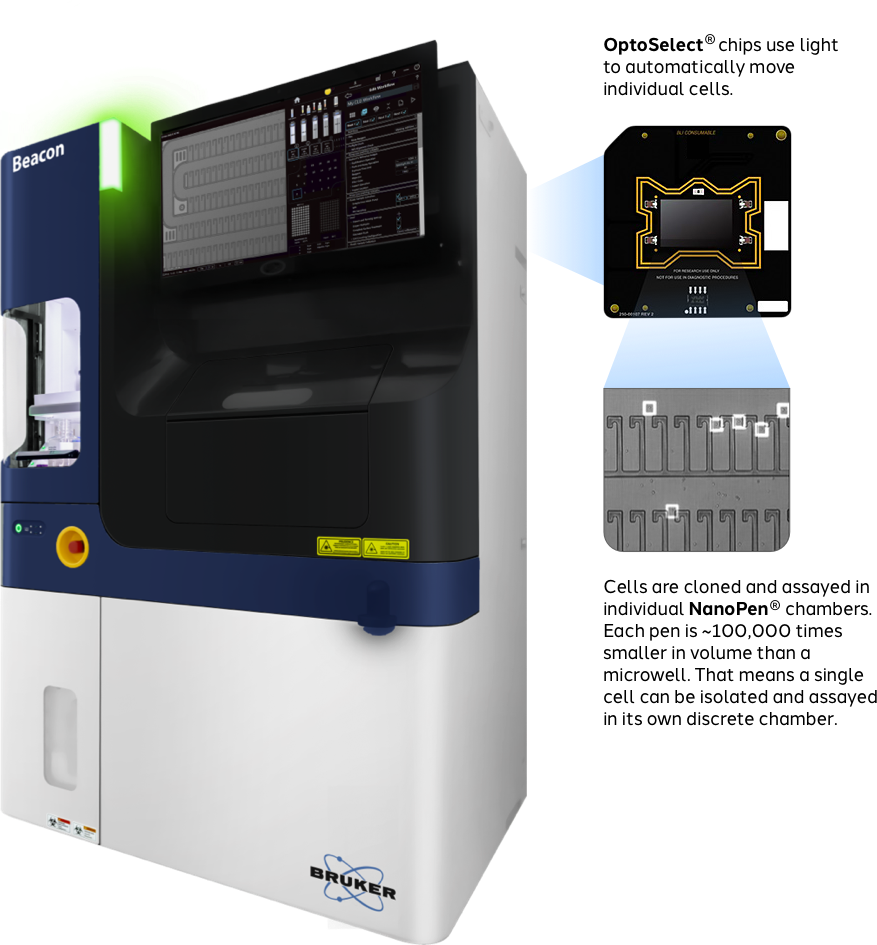
Key Product Features
- High-throughput screening
- Comprehensive assays
- Broad species compatibility
- Live cell recovery
- Rapid automated workflow
- Brightfield and fluorescent imaging
- Convenient software analysis
High Throughput Chips
Depending on your assay and throughput needs, chips with different throughput and NanoPen chamber sizes are available for the Beacon Select for Cell Line Development system, and you can run up to 2 chips at the same time.
Provides Exquisite Control of Cells and Beads
- Uses light to move cells around and into the NanoPens
- Allows for thousands of parallel single cell experiments at once
Allows Continuous Media Perfusion
- Provides minimal disruption of the contents in the NanoPens
- Allows for exchange of oxygen, nutrients, and waste in and out of the NanoPens in a matter of seconds
- Keeps cells alive and healthy for days to weeks
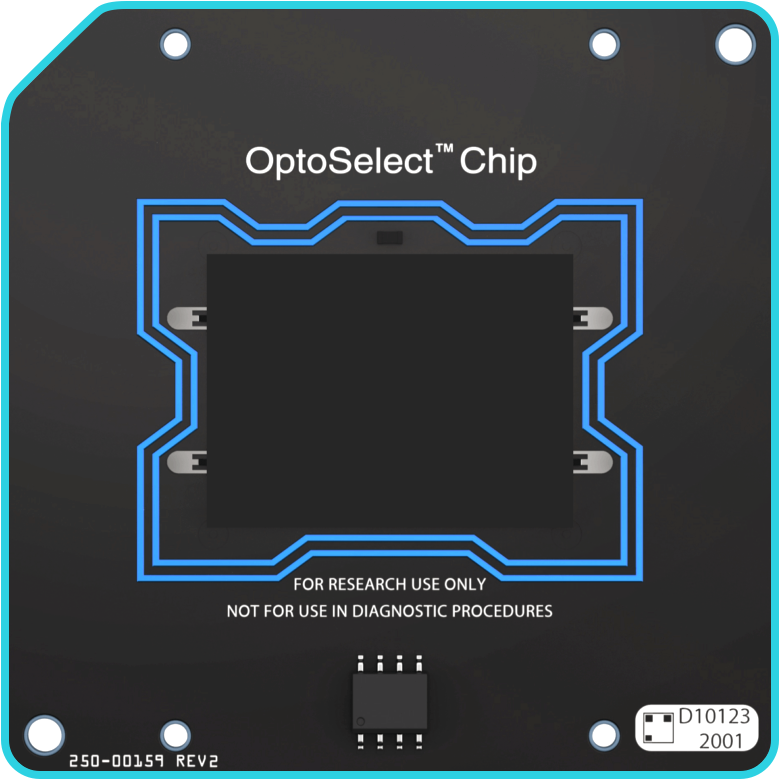

OptoSelect 1750 Chip
1.7 nL NanoPen chambers are ideal for longer term culture experiments including cell line development and adherent cell cloning.
OptoSelect 1750 Chip
1.7 nL NanoPen chambers are ideal for longer term culture experiments including cell line development and adherent cell cloning.
OptoSelect 1750 Chip
1.7 nL NanoPen chambers are ideal for longer term culture experiments including cell line development and adherent cell cloning.
OptoSelect 1750 Chip
1.7 nL NanoPen chambers are ideal for longer term culture experiments including cell line development and adherent cell cloning.
Automatically and Precisely
4 Simple Steps to Your Best Cells
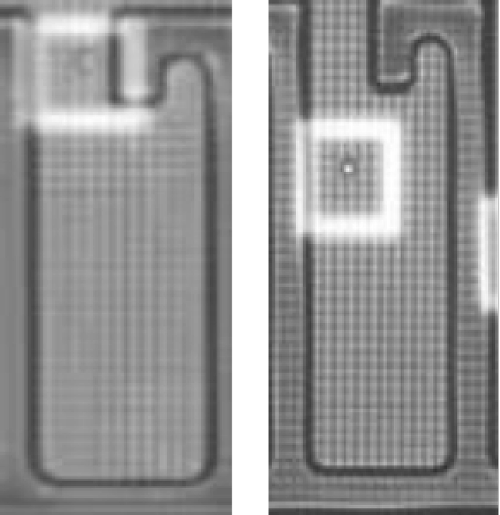
OEP fluidics uses light and millions of light-actuated pixels to move individual cells so they can be isolated, cultured, assayed and exported. Each cell or clone is imaged and monitored in real-time in a NanoPen® chamber on our OptoSelect® chips to provide rich visual data early and often. Our full platform and software suite deliver cell processing and deep profiling with more information about cell function than any other technology.
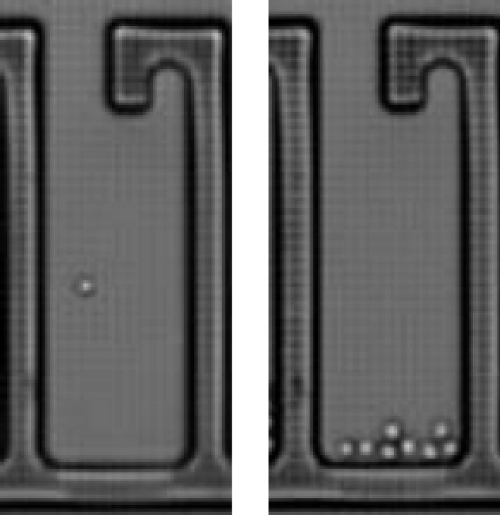
1. Sort
Our software automatically detects individual cells and then uses patterned light to isolate single cells into NanoPen chambers.
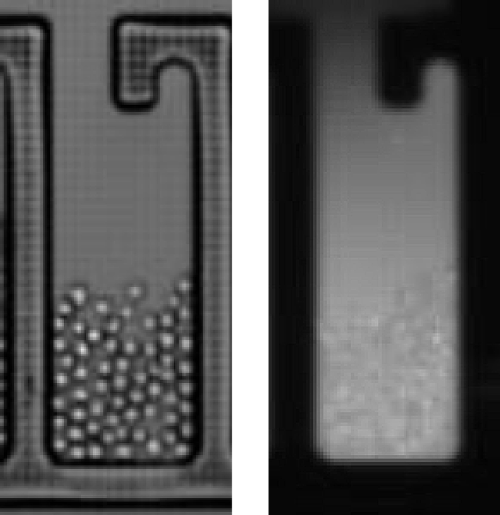
2. Culture
As cells expand fresh media is perfused across the chip, nutrients diffuse in and waste diffuses out while the software images the NanoPen chambers continuously – enabling cell counting, growth rate calculations, or other morphological characterization.
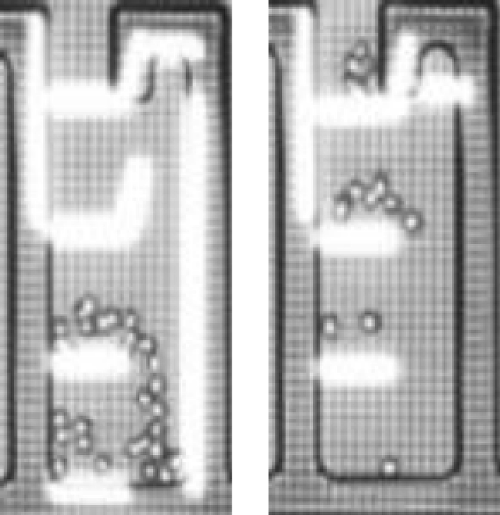
3. Assay
Run thousands of assays in parallel using our NanoPen chambers that are 100,000 times smaller in volume than a microwell in a 96 well plate – enabling phenotypic characterization of individual or populations of cells.
4. Recover
Selectively recover your best cells with phenotypes of interest from NanoPen chambers for downstream processing including sequencing or live cell recovery.
Researcher Spotlights


Unleash the Full Potential of
Your Single Cell Research
Complete the form to connect with us and discover how the Beacon technology can enhance your Antibody Discovery, Cell Line Development, or T Cell Profiling work.
Our expert team will be able to answer your questions, show you how the Beacon system works, and share the most relevant datasheets & case studies for your research.